

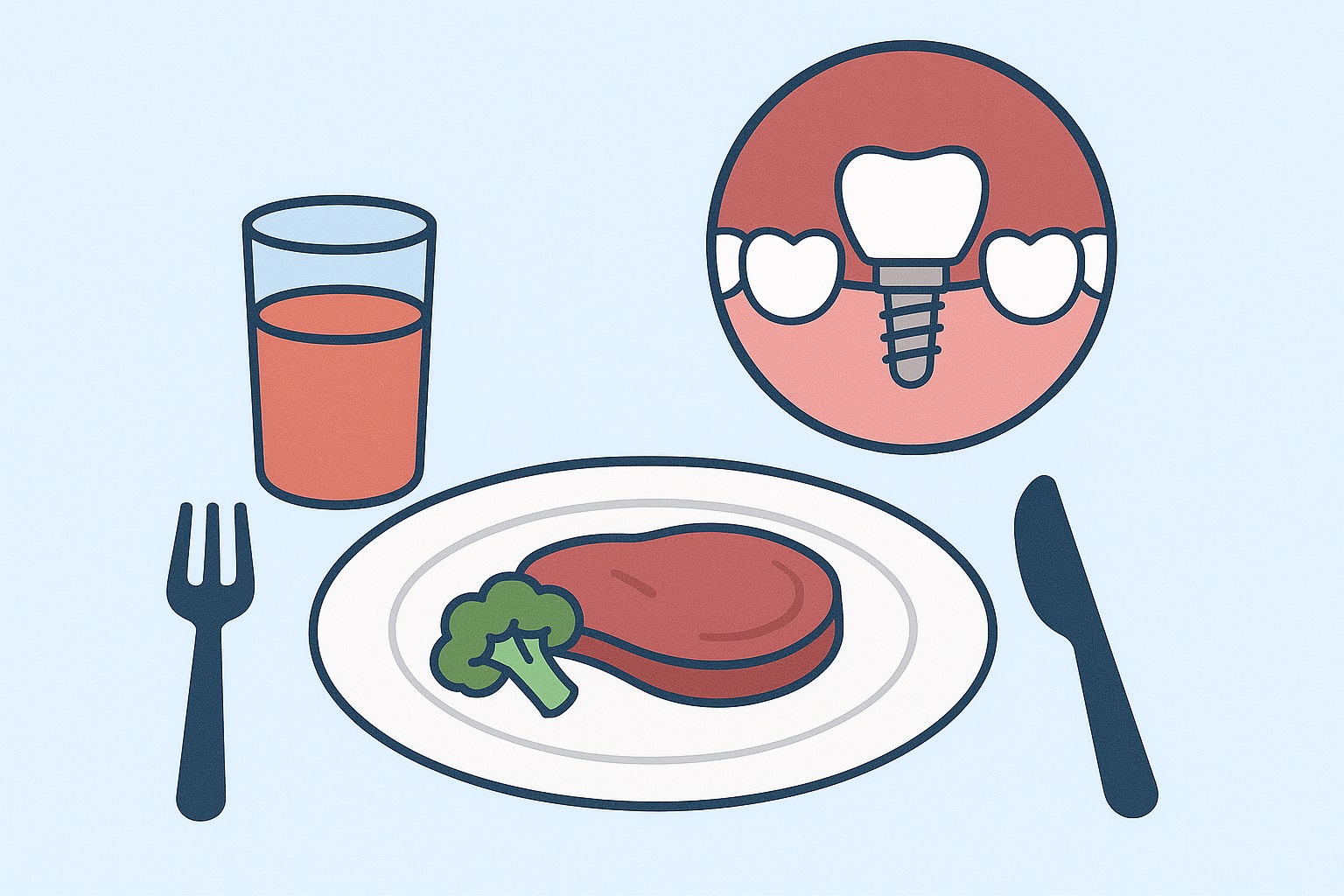
Getting dental implants is a major step toward restoring your smile and chewing ability, but recovery takes time — and that includes changes to how and what you eat. Right after the procedure, your mouth needs to heal, and putting stress on the implant too soon can lead to complications or failure.
Many patients wonder when they can return to their normal diet, and the answer depends on how well the healing progresses. Following the recommended eating timeline is key to protecting your new implant and ensuring it integrates properly with your jawbone.
What Happens Right After Implant Surgery
Immediately after dental implant surgery, your mouth will be numb from local anesthesia, and mild to moderate swelling is normal. This is the body’s natural response to the surgical procedure and typically lasts for a few days.
During the first 24 to 72 hours, the implant site is especially sensitive. The gum tissue around the implant is healing, and the bone has just started the process of bonding with the implant — a phase called osseointegration. This early healing stage is critical, and putting pressure on the area by chewing solid foods can disrupt the implant’s stability.
Because of this, dentists advise sticking to a liquid or soft-food diet right after surgery to prevent irritation, dislodging the implant, or introducing bacteria into the surgical site.
Eating Timeline After Dental Implants
Your return to a normal diet happens in phases, and following the right timeline helps ensure proper healing and long-term implant success.
First 24–48 Hours: Liquids Only
Stick to cool or room-temperature liquids like:
- Water
- Smoothies (without seeds)
- Broths
- Protein shakes
- Cold soups
Avoid hot drinks, alcohol, and straws (which can disturb blood clots).
First Week: Soft Foods Only
As swelling reduces, you can start eating soft, non-chewy foods such as:
- Mashed potatoes
- Scrambled eggs
- Yogurt
- Oatmeal
- Soft pasta
- Applesauce
Chew away from the implant site and eat slowly.
2–4 Weeks: Slowly Reintroduce Firmer Foods
As gums begin to heal and discomfort fades, you can begin adding foods like:
- Soft-cooked vegetables
- Rice
- Tender fish or shredded chicken
- Bread without crusts
Still avoid anything hard, crunchy, or sticky.
3 Months and Beyond: Resume Normal Eating
By this stage, osseointegration is usually complete and your dentist may clear you to eat normally again — including meats, raw veggies, and other chewy foods. This assumes there were no complications and that your implant is healing well.
Always follow your dentist’s specific advice, as recovery times can vary based on how many implants you received and your overall health.
Foods to Avoid and Why
Even though your appetite may return quickly, certain foods can seriously interfere with healing — especially in the first few weeks after dental implant surgery. Avoiding these can prevent pain, infection, or implant failure.
Crunchy or Hard Foods
Examples: Chips, nuts, raw carrots, crusty bread
Why avoid: These can put too much pressure on the implant site or get lodged between healing gums.
Sticky or Chewy Foods
Examples: Caramel, gum, taffy, chewy candy
Why avoid: Sticky textures can pull at the healing gum tissue or dislodge the temporary crown or abutment if placed.
Spicy or Acidic Foods
Examples: Hot peppers, citrus fruits, tomato sauce
Why avoid: These can irritate the surgical area and increase inflammation or discomfort.
Hot Foods and Beverages
Examples: Coffee, tea, hot soup
Why avoid: Heat can increase bleeding and swelling, especially within the first 48 hours.
Being cautious with your diet in the early stages greatly reduces the chance of complications — and helps your implant heal stronger and faster.
Tips for a Smooth Eating Transition
Recovering from dental implants doesn’t mean you have to sacrifice taste or nutrition — but you do need to eat smart. Here are a few practical tips to help you ease back into normal eating while protecting your implant:
1. Choose Nutrient-Dense Soft Foods
Even while on a soft diet, aim to get plenty of protein, vitamins, and minerals to support healing. Good choices include:
- Greek yogurt
- Scrambled or boiled eggs
- Mashed avocado
- Smooth nut butters (in small amounts)
- Cooked, pureed vegetables
2. Chew on the Opposite Side
If you received a single implant, chew on the opposite side of your mouth to keep pressure off the surgical area during the early healing stages.
3. Cut Food Into Small Pieces
Even when reintroducing solid foods, slicing items into smaller bites reduces strain and helps prevent accidental pressure on the implant.
4. Stay Hydrated
Drink plenty of water to keep your mouth clean and promote tissue healing. Avoid carbonated or sugary drinks, especially early on.
5. Follow Up With Your Dentist
Your provider will monitor your healing progress and let you know when it’s safe to expand your diet further. Don’t skip check-ups.
Conclusion
While dental implants offer a long-term solution for missing teeth, getting back to a normal diet takes time and patience. In the first few days, your focus should be on protecting the implant site and avoiding anything that could disrupt healing.
Most people can start reintroducing soft, solid foods within a couple of weeks, but true normal eating — including harder or chewy foods — typically resumes after 3 months, once the implant has fully fused with the jawbone.
Following your dentist’s instructions and adjusting your diet gradually ensures your implant heals properly and lasts for years to come.