
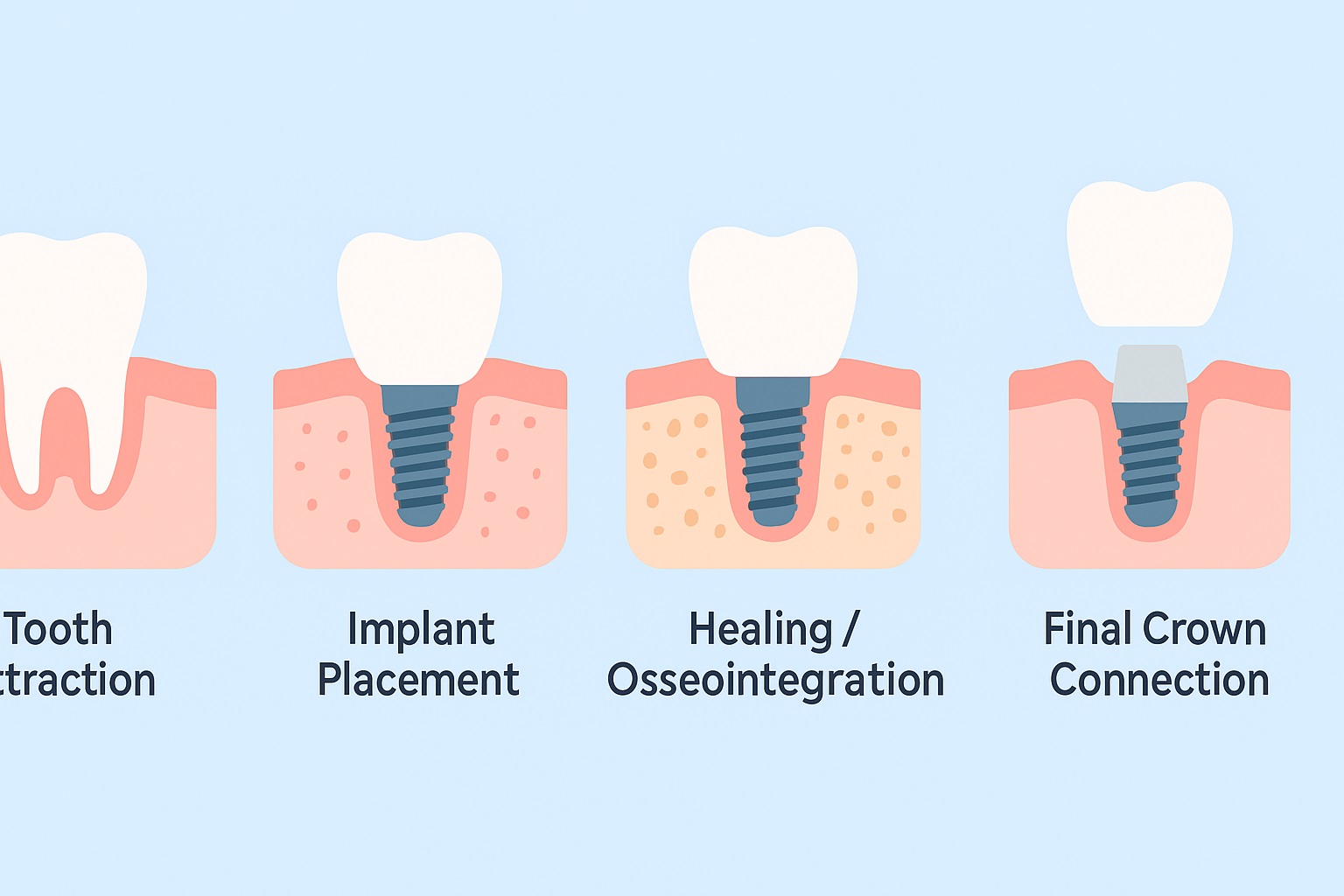
Dental implants offer a permanent solution for missing teeth, but the journey from surgery to a fully healed implant takes time and care. Healing doesn’t happen overnight, and knowing what to expect at each stage helps reduce anxiety, improves outcomes, and lets you identify any signs of trouble early. This post breaks down the entire recovery process week by week — from immediate aftercare to full implant integration — so you know exactly what’s normal and what’s not.
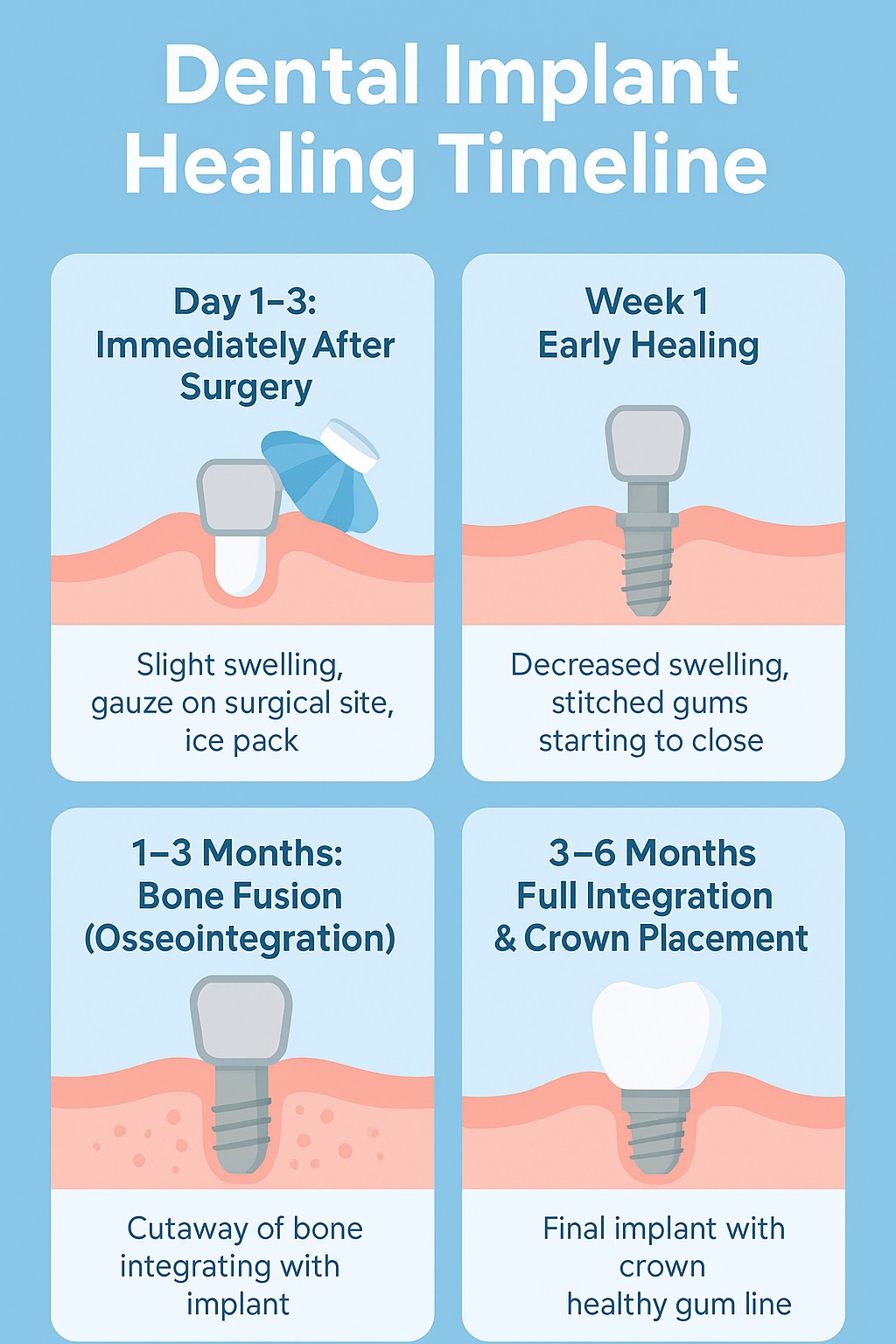
What Happens Right After Implant Surgery
Immediately after your dental implant surgery, your body begins the healing process. It’s normal to experience swelling, minor bleeding, bruising, and some discomfort in the first 24 to 72 hours. These are natural responses to the procedure and typically peak within the first two days before gradually subsiding.
What’s Normal
- Mild to moderate pain
- Swelling around the cheeks or jaw
- Small amount of bleeding or pink saliva
- Bruising around the mouth
What’s Not Normal
- Intense, throbbing pain that worsens after 3 days
- Heavy bleeding that doesn’t stop
- Signs of infection like pus, fever, or foul smell
- Loose implant or shifting sensation
Immediate Aftercare Tips
- Bite down gently on gauze to control bleeding
- Apply cold packs to reduce swelling
- Stick to soft foods and avoid hot liquids
- Don’t smoke or use straws (can delay healing)
- Keep your mouth clean, but avoid brushing the surgical site directly for a few days
Week 1: Managing Early Healing
During the first week after surgery, your mouth is in the initial healing phase. The surgical site begins closing, and the body works to repair soft tissue around the implant. This stage is all about gentle care and preventing infection.
What You Might Experience
Swelling usually peaks around day 2 or 3 and should begin to decrease by the end of the week. Bruising may appear on the cheek or jaw but is harmless and fades gradually. Mild pain is common and can be managed with medication.
Soft Tissue Response
Gums begin to adapt around the implant, and the early formation of tissue sealing begins.
Oral Hygiene Guidelines
- Rinse gently with saltwater or as directed
- Use a soft-bristled toothbrush and avoid the implant area
- Avoid mouthwash with alcohol
- Stick to soft foods
Red Flags to Watch
- Increased pain or swelling after day 4
- Bleeding that starts again after stopping
- Signs of infection: pus, unusual odor, or fever
Weeks 2–4: Tissue Recovery and Stabilization
By the second week, most post-op symptoms have faded. This period focuses on soft tissue recovery and preparing for long-term integration.
Gum Tissue Changes
The gums begin forming a tight seal around the implant or abutment. Slight overgrowth or reshaping may occur.
Sutures
Dissolvable stitches begin to fall out naturally. If non-dissolvable, your dentist will remove them.
What Healing Looks Like
The site appears pink, clean, and slightly contoured. No pus or abnormal swelling should be present.
Oral Hygiene & Diet
- Resume gentle brushing around the area
- Eat soft but textured foods
- Continue warm saltwater rinses
1–3 Months: Osseointegration Begins
This phase involves bone fusing with the implant — called osseointegration — and is critical for implant stability.
What You’ll Notice
Discomfort fades, and the implant site feels stable. The gums continue to contour naturally.
How to Support the Process
- Don’t apply chewing pressure to the implant
- Keep up with oral hygiene
- Attend follow-up visits
Warning Signs to Report
- Movement of the implant
- Persistent pain or swelling
- Gum inflammation or signs of infection
3–6 Months: Full Implant Integration
As osseointegration completes, the implant becomes part of your jaw. Your dentist may now place the final crown.
How the Implant Feels
The implant feels solid and natural. No discomfort should remain.
When It’s Ready for a Crown
- X-rays confirm full bone integration
- Dentist checks gum healing and implant stability
- Impressions are taken for your custom crown
Follow-Up and Maintenance
- Regular dental checkups
- Normal brushing and flossing
- Avoid damaging habits (e.g., chewing ice)
Conclusion
Healing after a dental implant procedure is a gradual process that unfolds over several months, with each stage playing a vital role in long-term success. From managing swelling in the first week to allowing bone fusion over the next several months, understanding what to expect at each step helps ensure a smoother recovery and better results.