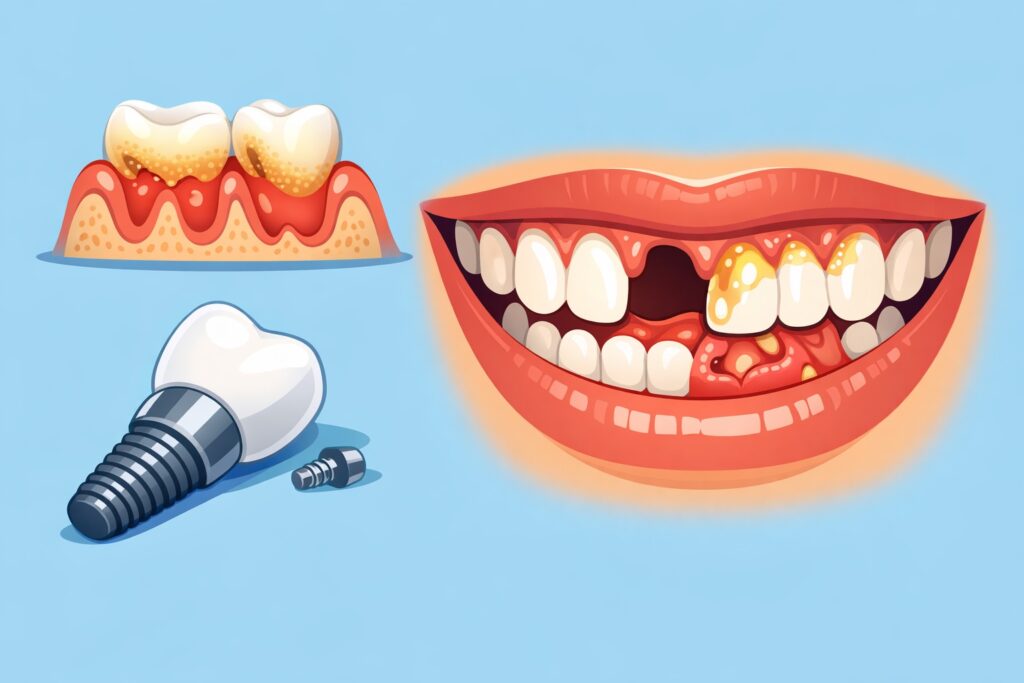
Missing teeth can affect more than just your appearance — they impact your ability to eat, speak, and maintain healthy bone structure. Dental implants have become a reliable solution for replacing lost teeth, but many patients wonder if gum disease might stand in the way.
Gum health plays a major role in implant success, and untreated issues can lead to complications. This guide explains how gum disease affects dental implants, what steps are needed before treatment, and how to maintain results long-term.
| Aspect | Dental Implants | Gum Disease (Periodontal Disease) |
|---|---|---|
| What it is | Artificial tooth root placed in the jawbone | Infection of the gums caused by bacteria |
| Main purpose | Replace missing teeth permanently | Affects gum health and bone support |
| Impact on gums | Requires healthy gums for success | Causes gum inflammation and recession |
| Bone involvement | Integrates with jawbone (osseointegration) | Leads to bone loss if untreated |
| Symptoms | Usually no pain once healed | Red, swollen gums, bleeding, bad breath |
| Risk if untreated | Implant failure due to infection | Tooth loss and implant complications |
| Can both occur together? | Yes, implants can fail if gum disease exists | Yes, gum disease can affect implants |
| Treatment | Implant surgery + proper oral care | Deep cleaning, medication, or surgery |
| Prevention | Excellent oral hygiene, regular checkups | Brushing, flossing, professional cleanings |
| Long-term outcome | Long-lasting with healthy gums | Manageable if treated early |
What Are Dental Implants?
Dental implants are small, screw-like posts made of titanium or other biocompatible materials. They are surgically placed into the jawbone to act as artificial tooth roots, supporting crowns, bridges, or dentures. Because they fuse with the bone through a process called osseointegration, implants provide a stable and long-lasting solution for missing teeth.
For implants to succeed, the surrounding gum tissue and bone must be healthy and free of infection. This is why evaluating a patient’s overall oral health is a critical step before implant surgery.
What Is Gum Disease and How Does It Affect the Mouth?
Gum disease, also called periodontal disease, is a bacterial infection that affects the tissues supporting the teeth. It begins as gingivitis, which causes red, swollen gums that may bleed. If left untreated, it can progress to periodontitis, a more severe form that damages the bone and connective tissue holding teeth in place.
Periodontal disease can cause:
- Receding gums
- Bone loss
- Loose or shifting teeth
- Chronic bad breath
Because dental implants rely on healthy gums and sufficient bone for stability, the presence of gum disease increases the risk of implant failure.
Can You Get Dental Implants If You Have Gum Disease?
Yes, but only after gum disease is properly treated and controlled. Patients with a history of periodontal disease are not automatically disqualified from receiving dental implants. However, active gum disease must be addressed before moving forward with any surgical procedure.
An implant dentist or periodontist will assess your oral health to determine:
- If your gum disease is active or under control
- Whether you’ve lost significant bone that would require grafting
- If your overall oral hygiene supports long-term success
Once the infection is cleared and the tissue is stable, dental implants may become a safe option.
Risks of Placing Implants With Untreated Gum Disease
Placing dental implants in a mouth with untreated gum disease can lead to serious problems. These include:
- Implant failure: Infection and inflammation can prevent proper integration with the bone.
- Bone loss: Ongoing gum disease continues to destroy the foundation needed to hold the implant.
- Peri-implantitis: A condition similar to gum disease that affects implants, causing infection and possible implant loss.
- Prolonged healing or complications after surgery.
This is why dentists emphasize resolving any gum issues before moving forward with implant treatment.
Treating Gum Disease Before Dental Implants
Before dental implants can be placed, a periodontist or general dentist will work to control gum disease through:
- Scaling and root planing: Deep cleaning procedures to remove plaque and tartar below the gum line
- Antibiotics or antimicrobial rinses: To reduce bacteria
- Gum surgery (in severe cases): To remove infected tissue or regenerate bone
- Bone grafting: If bone loss has occurred, grafts may be needed to rebuild the implant site
After treatment, your dentist will monitor healing over several weeks or months before reevaluating implant readiness.
Caring for Dental Implants With a History of Gum Disease
Patients who’ve had gum disease in the past must commit to ongoing care to protect their dental implants. This includes:
- Brushing twice daily with a soft-bristled brush and non-abrasive toothpaste
- Flossing or using interdental brushes to clean around implants
- Routine professional cleanings and exams, usually every 3–6 months
- Avoiding smoking, which significantly increases the risk of implant failure
- Monitoring for signs of inflammation, such as bleeding, redness, or soreness near the implant site
With good habits and regular dental care, patients can maintain healthy implants even with a history of gum disease.
Conclusion
Gum disease doesn’t automatically rule out the possibility of getting dental implants, but it does require extra care and planning. By treating gum infections before surgery and committing to long-term oral health, many patients with a history of periodontal disease can enjoy the full benefits of dental implants. Always work closely with your dental team to ensure a safe, successful outcome.