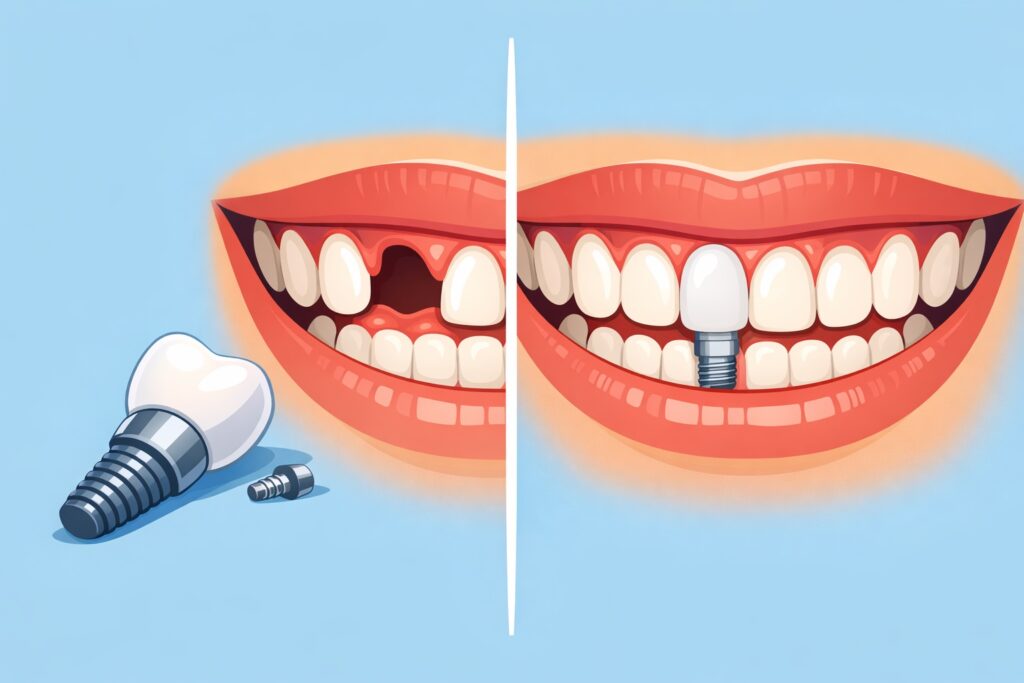
Losing a front tooth can be both emotionally and physically challenging. Whether due to injury, decay, or gum disease, the absence of a visible tooth impacts your appearance, confidence, and even daily functions like speaking and chewing. For those seeking a permanent, natural-looking replacement, dental implants have become the preferred solution. Unlike dentures or bridges, implants offer stability, preserve jawbone health, and blend seamlessly with your existing teeth — making them especially ideal for front tooth replacement.
1. Why Replace a Missing Front Tooth?
The front teeth, also known as incisors, play a critical role in both function and appearance. They are the first thing people see when you smile and are essential for proper speech and biting into food. Losing a front tooth doesn’t just affect aesthetics — it can lead to a chain of oral health problems if not addressed.
When a front tooth is missing, nearby teeth can begin to shift, leading to misalignment and bite issues. The gap can also cause bone loss in the jaw over time, which may change your facial structure. Additionally, speech sounds like “s” or “th” can become difficult to pronounce clearly.
Beyond the physical impact, the emotional effects are just as real. Many people feel self-conscious about smiling, talking, or taking photos, which can affect their personal and professional lives. Replacing the tooth with an implant not only restores function but also brings back natural appearance and self-esteem.
2. What Is a Front Tooth Dental Implant?
A front tooth dental implant is a permanent solution used to replace a missing incisor by surgically placing a titanium post into the jawbone. This post acts as an artificial tooth root and provides a stable foundation for a custom-made crown that looks and functions like a natural tooth.
The implant system has three key components:
- Implant post – a small titanium screw that integrates with the jawbone
- Abutment – a connector placed on top of the implant to hold the crown
- Dental crown – the visible part that matches the color and shape of your natural teeth
What sets dental implants apart from other solutions like bridges or dentures is that they don’t rely on adjacent teeth for support. This preserves the health of surrounding teeth and helps maintain jawbone density over time. In the case of front teeth, achieving a natural look is especially important — implants are shaped and shaded to match your other teeth, offering a seamless and realistic appearance.
3. The Implant Procedure Step-by-Step
Getting a dental implant for a front tooth involves several stages spread out over a few months to ensure long-term success and proper healing. Here’s a breakdown of the typical process:
1. Consultation and Imaging
The dentist evaluates your oral health using X-rays or a 3D scan to check bone density and determine if you’re a good candidate for an implant. This is also when your treatment plan is created.
2. Tooth Extraction (if needed)
If the damaged front tooth is still present, it will be carefully removed. In some cases, the implant can be placed on the same day, but often the site needs time to heal first.
3. Bone Grafting (if necessary)
If the jawbone isn’t thick or strong enough to support the implant, a minor bone graft may be needed. Healing after this step typically takes a few months.
4. Implant Placement
The titanium post is surgically inserted into the jawbone under local anesthesia. After placement, the bone begins to fuse with the implant through a process called osseointegration. This step takes about 3 to 6 months.
5. Abutment Placement
Once healing is complete, a small connector called an abutment is attached to the implant. This part sits above the gum line and holds the crown.
6. Crown Attachment
Finally, a custom-made crown is placed on the abutment. It’s shaped and shaded to match your surrounding teeth, restoring both appearance and function.
4. Cost of Front Tooth Implants in the U.S.
The cost of a front tooth dental implant in the U.S. typically ranges from $3,000 to $6,000 per tooth. This includes the implant post, abutment, and crown. However, prices can vary depending on several key factors:
Factors That Affect Cost
- Location: Dental care in urban areas or coastal states tends to be more expensive than in rural or inland regions.
- Experience of the Dentist: Specialists with advanced training in implant dentistry may charge more, but often provide more precise, natural-looking results.
- Type of Materials Used: High-quality zirconia or porcelain crowns cost more than standard materials but offer better aesthetics for front teeth.
- Additional Procedures: Tooth extractions, bone grafts, or temporary restorations will add to the total cost.
Insurance and Financing
Most dental insurance plans do not fully cover implants, especially if considered cosmetic. However, some plans may cover part of the procedure, such as extractions or crowns. Many dental offices also offer financing plans or work with third-party providers like CareCredit to help spread payments over time.
5. Healing and Recovery Timeline
The healing process for a front tooth dental implant is crucial to its long-term success. While the total timeline can vary, most patients complete the process within 3 to 6 months.
Initial Healing (First 1–2 Weeks)
After implant placement, mild swelling, soreness, and minor bleeding are common for a few days. Most patients return to normal routines within 48–72 hours, though strenuous activities should be avoided early on. Pain can typically be managed with over-the-counter medication.
Osseointegration Phase (3–6 Months)
This is the period when the implant fuses with your jawbone. It happens gradually and is essential for creating a strong, stable base for the crown. During this phase, follow-up visits are scheduled to monitor progress. A temporary crown may be placed for appearance.
Final Crown Placement
Once healing is complete and the implant is fully integrated, the final crown is attached. At this point, the tooth looks and functions like a natural part of your smile.
Tips for Smooth Recovery
- Stick to soft foods in the early days
- Avoid smoking, which slows healing
- Maintain good oral hygiene but avoid brushing directly over the surgical site for the first few days
- Attend all follow-up appointments
6. Pros and Cons of Front Tooth Implants
Pros
- Natural Appearance: Implants closely match the look, shape, and color of your natural teeth, making them ideal for front tooth replacement.
- Permanent Solution: With proper care, implants can last 15+ years, often a lifetime.
- Preserve Jawbone Health: The implant stimulates the bone like a natural tooth root, preventing bone loss that can lead to facial changes.
- Stable and Functional: Unlike dentures, implants won’t shift or affect your speech and eating habits.
- No Impact on Neighboring Teeth: Unlike bridges, implants don’t rely on grinding down adjacent teeth for support.
Cons
- Higher Initial Cost: Implants are more expensive than alternatives like bridges or partial dentures.
- Longer Treatment Time: The full process can take several months, especially if bone grafting is needed.
- Surgical Risks: As with any surgery, there are risks like infection, implant failure, or nerve damage, though these are rare when performed by experienced professionals.
- Not Always Covered by Insurance: Many insurance plans consider implants elective and don’t fully cover them.
7. How to Care for a Front Tooth Implant
Daily Oral Hygiene
- Brush Twice Daily: Use a soft-bristled toothbrush and non-abrasive toothpaste to clean around the implant and gum line.
- Floss Daily: Use implant-safe floss or a water flosser to remove plaque between teeth and around the abutment.
- Rinse with Antibacterial Mouthwash: This helps reduce the risk of gum inflammation and infection.
Foods to Avoid
- Hard Foods: Ice, hard candies, or nuts can damage the crown.
- Sticky Foods: Gum and caramel can put stress on the crown and abutment.
- High-Sugar Snacks: While implants don’t decay, sugar feeds bacteria that can affect surrounding gums.
Routine Dental Visits
- Visit your dentist every 6 months for cleanings and implant check-ups.
- Early detection of any gum issues helps prevent implant-related complications.
Lifestyle Factors
- Avoid Smoking: It reduces blood flow and can slow healing, increasing the risk of implant failure.
- Wear a Night Guard (if needed): If you grind your teeth at night, a custom guard can protect the implant and surrounding teeth.
Conclusion
Replacing a missing front tooth is about more than restoring your smile — it’s about regaining function, confidence, and long-term oral health. Dental implants offer a durable, natural-looking solution that outperforms other options in stability and appearance. Though the process requires time and investment, the results are often permanent and life-changing.
For anyone in the U.S. considering a front tooth implant, consulting with a qualified dental implant specialist is the first step. A personalized treatment plan will ensure the best outcome for both health and aesthetics.