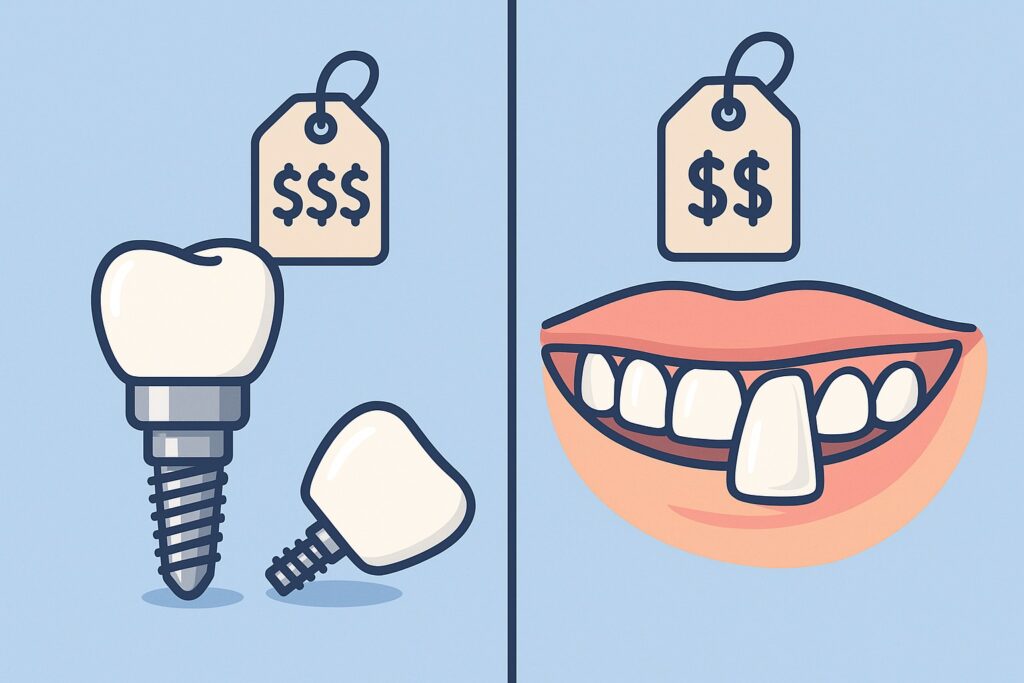
Both veneers and dental implants can dramatically improve your smile, but they are very different treatments designed for different dental problems. While veneers are typically used to improve the appearance of healthy teeth, dental implants replace missing or severely damaged teeth. Because of this, the cost, longevity, and long-term value of each option vary significantly.
Understanding the financial side of each treatment can help you decide which is the better investment for your needs. This guide breaks down the cost of veneers and dental implants, explains what factors influence pricing, and helps you choose based on both budget and long-term goals.
What Are Dental Veneers?
Dental veneers are thin, custom-made shells designed to cover the front surface of teeth to improve their appearance. They are typically used for cosmetic purposes and can correct issues like discoloration, chips, minor gaps, uneven shapes, or worn enamel.
There are two main types of veneers:
- Porcelain veneers – More durable and stain-resistant, but also more expensive. These are custom-fabricated in a lab and typically last 10–15 years or longer with proper care.
- Composite veneers – Made from a tooth-colored resin material and applied directly to the tooth. They’re more affordable but usually last 5–7 years and may stain over time.
Veneers are a non-surgical option and involve removing a small amount of enamel from the tooth surface to ensure a proper fit. Since they only alter the front surface of the tooth, veneers are best for patients with healthy natural teeth looking to enhance their smile—not replace it.
What Are Dental Implants?
Dental implants are a surgical solution used to replace missing or severely damaged teeth. Unlike veneers, which cover the front of existing teeth, implants replace the entire tooth—including the root—with a permanent, artificial structure.
A standard dental implant consists of three main parts:
- Implant post – A titanium or zirconia screw surgically placed into the jawbone to act as a root.
- Abutment – A connector between the post and the crown.
- Crown – The visible tooth replacement made from porcelain or another durable material.
Implants are used when a tooth is missing, beyond repair, or has already been extracted. They offer a functional, natural-looking replacement that can last decades with proper care. The process takes longer than veneers because it involves surgery, healing time (osseointegration), and multiple appointments.
Unlike cosmetic treatments, dental implants address oral health and function as well as appearance, making them a full restorative solution.
Cost of Veneers
The cost of dental veneers can vary widely based on several factors, including material type, number of teeth treated, dentist experience, and geographic location. Here’s a breakdown:
- Porcelain veneers: $900 – $2,500 per tooth
- Composite veneers: $250 – $1,500 per tooth
Porcelain veneers are more expensive due to their custom fabrication, higher durability, and natural appearance. They often require at least two visits—one for tooth preparation and impressions, and another for placement.
Composite veneers are more budget-friendly and usually placed in a single visit, but they don’t last as long and may stain over time.
Other Cost Factors:
- Location: Treatment in major cities or high-end clinics typically costs more.
- Number of veneers: Some patients get 2–4, while full smile makeovers may involve 6–10 veneers.
- Lab fees and materials: High-quality labs and premium materials increase cost but improve results.
Since veneers are usually considered cosmetic, insurance rarely covers them. However, their upfront cost may be worth it for patients focused on aesthetics and quick smile transformations.
Cost of Dental Implants
Dental implants have a higher initial cost than veneers because they involve surgery, multiple components, and longer treatment timelines. However, they are also one of the most durable and functional tooth replacement options available.
Average Cost Breakdown (Per Tooth):
- Implant post (surgery): $1,000 – $2,000
- Abutment and crown: $1,000 – $2,000
- Total per implant: $2,000 – $4,500+
Additional Possible Costs:
- Tooth extraction (if needed): $100 – $500
- Bone graft (if jawbone isn’t strong enough): $300 – $3,000
- CT scans and imaging: $150 – $750
- Full arch replacement (All-on-4 or similar): $15,000 – $30,000+
Dental implant costs depend heavily on the case complexity, material (titanium vs zirconia), dentist’s expertise, and location. The total cost may increase if additional procedures like sinus lifts or bone grafts are required.
Unlike veneers, dental implants are often partially covered by dental insurance, especially when placed for medical reasons (e.g., due to trauma, decay, or disease). Despite the higher price tag, many patients consider implants a long-term investment due to their strength and natural function.
Longevity and Maintenance
When comparing veneers and implants, it’s important to factor in how long each option lasts and what kind of care they require over time.
Veneers:
- Lifespan:
- Porcelain veneers: 10–15 years
- Composite veneers: 5–7 years
- Maintenance:
- Regular brushing and flossing
- Avoiding habits like nail biting or chewing hard objects
- Occasional replacements due to wear, staining, or damage
Veneers are strong but not permanent. Over time, they may chip, crack, or discolor—especially composite types. Replacing veneers adds to long-term cost.
Dental Implants:
- Lifespan:
- The implant post can last 20+ years or even a lifetime
- Crowns may need replacement after 10–15 years, depending on material and care
- Maintenance:
- Good oral hygiene and routine dental check-ups
- Avoiding smoking or untreated gum disease
- Flossing around the implant like natural teeth
Implants have a higher upfront cost but offer superior long-term value, especially for patients looking for a permanent tooth replacement with minimal maintenance beyond standard oral care.
When to Choose Veneers vs Implants
Choosing between veneers and dental implants depends on your dental condition, treatment goals, and budget. Although both can enhance your smile, they serve very different purposes.
Choose Veneers If:
- Your teeth are healthy but cosmetically flawed (discoloration, chips, minor misalignment)
- You want a quick cosmetic solution without surgery
- You’re enhancing the shape, size, or brightness of your smile
- You don’t need to replace missing or severely damaged teeth
Veneers are ideal for smile makeovers, especially in the front teeth, and are best suited for patients who want fast, non-invasive improvements.
Choose Implants If:
- You have missing, loose, or non-restorable teeth
- You want a permanent, full-tooth replacement (root and crown)
- You’re focused on functionality, not just appearance
- You’re willing to invest more time and money for a long-lasting solution
Dental implants are a restorative treatment, not just cosmetic. They restore chewing ability, protect jawbone health, and prevent shifting of adjacent teeth.
In some cases, both treatments can be combined—for example, implants to replace missing teeth and veneers on nearby teeth for aesthetic balance.
Conclusion
Veneers and dental implants are both effective ways to improve your smile, but they serve different roles—and come with different costs. Veneers are best for enhancing the look of existing teeth and are more affordable upfront, but they may require replacement over time. Implants, while more expensive initially, offer a permanent solution for missing or failing teeth and deliver long-term functional and health benefits.
When comparing costs, don’t just look at the price tag—consider durability, maintenance, purpose, and overall value. Veneers may be right for cosmetic enhancements, while implants are ideal for full-tooth restoration. The best choice depends on your dental goals, condition, and long-term expectations.
A consultation with a trusted dentist can help you weigh these options and choose the treatment that fits your needs—and your budget.