
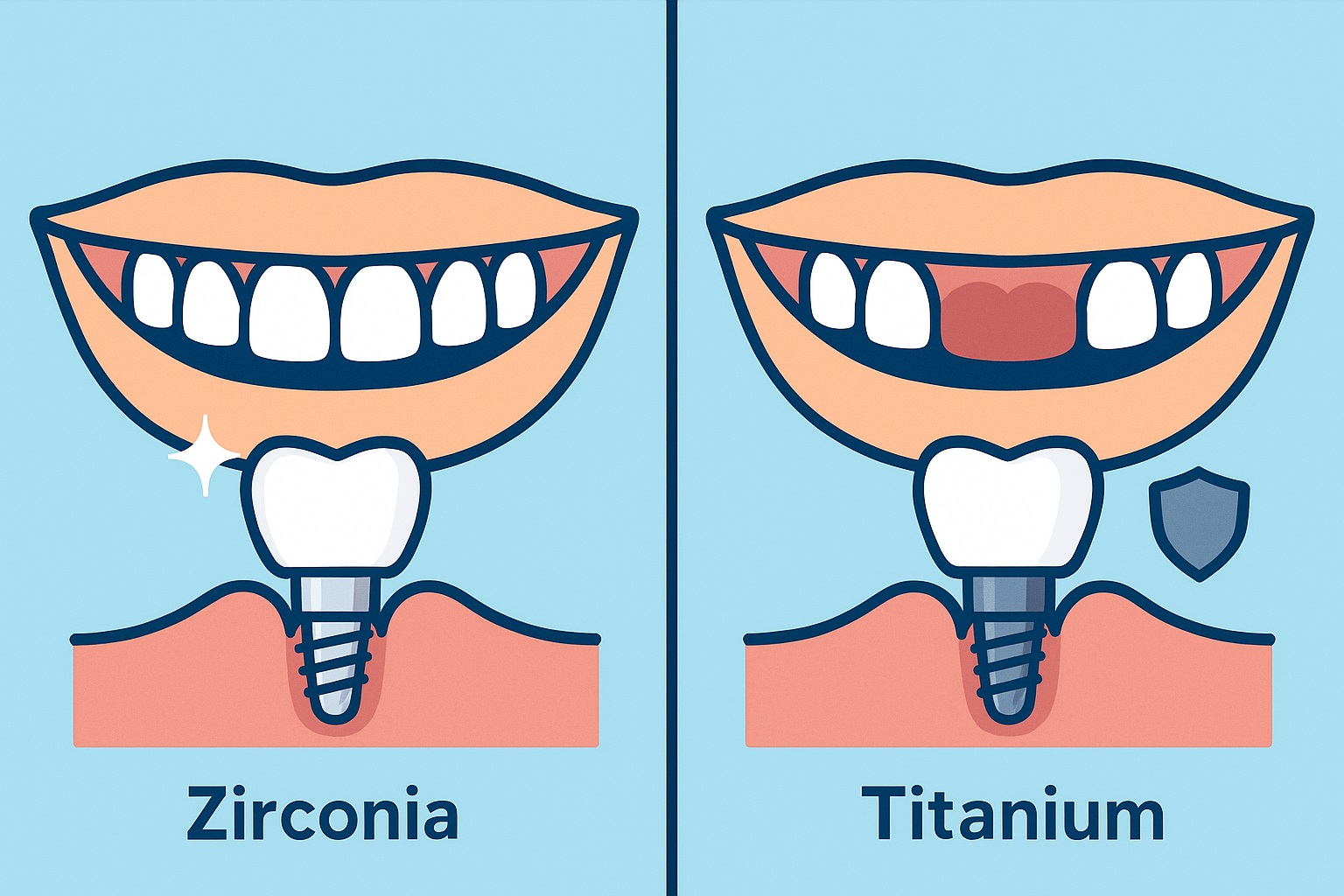
Dental implants have become one of the most reliable and long-lasting solutions for replacing missing teeth. They function like natural tooth roots and support crowns, bridges, or dentures. One of the most important choices when getting dental implants is the material used for the implant itself. Titanium and zirconia are the two main materials used today, and each has its own advantages and limitations. The right choice can impact everything from healing time to durability, aesthetics, and even long-term oral health. Understanding the differences between zirconia and titanium implants is essential for patients looking to make an informed decision about their dental care.
What Are Titanium Dental Implants?
Titanium dental implants have been used since the 1960s and are considered the gold standard in implant dentistry. Made from pure titanium or titanium alloys, these implants are known for their excellent strength, durability, and high success rates over decades of clinical use.
Titanium is biocompatible, meaning it integrates well with human bone through a process called osseointegration. This allows the implant to become a stable foundation for artificial teeth. Its mechanical strength makes it suitable for both single-tooth replacements and full-mouth restorations.
Titanium implants are typically made in two parts: the implant post (which is inserted into the jawbone) and the abutment (which connects the post to the visible crown). This two-piece design provides flexibility during placement and restoration, making them a preferred choice for many dentists.
However, because titanium is a metal, there is a slight risk of allergic reactions in rare cases, and some patients prefer a metal-free alternative for aesthetic or health reasons.
What Are Zirconia Dental Implants?
Zirconia dental implants are a newer alternative to traditional titanium implants. They are made from zirconium dioxide, a ceramic material known for its high strength and excellent biocompatibility. Though ceramic, zirconia is incredibly durable and resistant to corrosion, making it a strong candidate for long-term use in dental restorations.
Unlike titanium implants, zirconia implants are usually one-piece, meaning the implant and abutment are fused together. This reduces the number of connections and may lower the risk of bacterial buildup, which can help support better gum health.
Zirconia’s natural white color gives it a major aesthetic advantage—especially in cases where the gums are thin or prone to recession. It eliminates the risk of a gray metal hue showing through the gum tissue or the crown.
While zirconia implants are gaining popularity, they do have some limitations. They are less flexible than titanium in terms of surgical placement and are not yet as extensively studied over decades. Still, for patients seeking a metal-free and more natural-looking implant, zirconia is a compelling option.
Durability and Strength Comparison
When choosing between zirconia and titanium dental implants, durability is a key factor. Titanium has a long history of clinical success, with many implants lasting 20 years or more when properly maintained. Its metal composition allows for slight flexibility under pressure, which helps absorb biting forces and reduce the risk of fractures.
Zirconia, while strong, is a ceramic material and tends to be more brittle than titanium. It performs well under normal biting forces but may be more prone to cracking or chipping under excessive stress, especially in patients who grind their teeth or have high bite pressure.
Titanium’s two-piece design also allows for more precise placement and angling, which can contribute to better long-term mechanical stability. Zirconia implants, being mostly one-piece, offer fewer adjustment options, which can impact their resilience in complex cases.
That said, advancements in zirconia technology have significantly improved its strength, and modern designs are much more robust than earlier versions. Still, titanium generally holds an edge in terms of mechanical performance, especially for multi-tooth restorations or in areas of the mouth where strong forces are common.
Biocompatibility and Healing
Both titanium and zirconia dental implants are highly biocompatible, meaning they are generally well accepted by the body. However, there are subtle differences in how each material interacts with surrounding tissue during and after healing.
Titanium has been extensively studied and is known to integrate very effectively with bone. The osseointegration process—the direct connection between implant and jawbone—is one of titanium’s greatest strengths. Healing typically progresses smoothly, and most patients experience minimal complications.
However, a small percentage of patients may have metal sensitivities or allergies to titanium or other metals in titanium alloys. While these reactions are rare, they can result in localized inflammation or implant failure in sensitive individuals.
Zirconia, being metal-free, is often chosen by patients seeking a hypoallergenic option. Its smooth surface also seems to attract less bacterial plaque, which can reduce the risk of peri-implantitis (inflammation around the implant). In addition, zirconia may support slightly better soft tissue attachment, which can promote healthier gums around the implant.
Healing times for both materials are similar, but zirconia’s one-piece design means that in some cases, healing may occur with the implant already exposed, which can impact comfort and recovery depending on the case.
Aesthetics and Gum Health
Aesthetic appeal is a major concern, especially for implants placed in the front of the mouth. Zirconia clearly stands out in this area due to its tooth-like white color, which blends more naturally with surrounding teeth and soft tissues. This makes it ideal for patients with thin or translucent gums, where a titanium implant might show through as a gray shadow.
Titanium implants, although strong and durable, are metallic gray in color. If gum recession occurs over time, the dark hue may become visible around the gumline or through the crown, affecting the natural look of the smile. While modern techniques and ceramic abutments can reduce this effect, it’s still a concern in some cases.
In terms of gum health, zirconia may offer slight advantages. Studies suggest it accumulates less plaque and bacteria on its surface compared to titanium, which can help maintain healthier gums and lower the risk of peri-implant disease. The one-piece design of many zirconia implants also eliminates micro-gaps where bacteria can accumulate, further protecting soft tissue.
Overall, zirconia implants are often the preferred choice for patients prioritizing cosmetic results, especially in visible areas of the mouth. Titanium still performs well but may require additional materials or techniques to achieve comparable aesthetic outcomes.
Cost Differences
Cost is another important factor when comparing zirconia and titanium dental implants. In general, zirconia implants tend to be more expensive than titanium ones. This price difference can be attributed to several factors, including material cost, manufacturing complexity, and limited availability.
Titanium implants have been used for decades, which has led to wide production, lower costs, and more options on the market. Most dental clinics are equipped to place and restore titanium implants, and the procedures are often standardized, helping to keep costs manageable.
Zirconia implants, on the other hand, are newer and not as widely adopted. They require specialized training and tools for placement, and fewer implant systems offer zirconia options. As a result, patients may face higher costs both for the implant itself and for the surgical and restorative procedures.
Additionally, since many zirconia implants are one-piece, they may require more precise planning upfront, which can add to the overall treatment expense. However, for patients seeking a metal-free or highly aesthetic solution, the added cost may be worthwhile.
It’s also worth noting that insurance coverage for either type of implant varies, and in many cases, the cost difference will need to be paid out-of-pocket by the patient.
Which One Is Right for You?
Choosing between zirconia and titanium dental implants depends on a combination of health needs, aesthetic goals, budget, and personal preferences.
If you’re looking for a well-established solution with decades of research, titanium implants are the most widely used and offer excellent long-term success. They are especially suitable for complex cases, full-arch restorations, and patients who need flexible treatment options. Their mechanical strength and versatility make them the go-to option for many dentists.
On the other hand, zirconia implants are ideal for patients who prefer a metal-free alternative, have a history of metal sensitivity, or place a high priority on natural-looking aesthetics—especially in the front teeth. They may also be a better option for those with thin gum tissue where metal might show through.
It’s important to consult with a qualified implant dentist who can assess your oral health, jawbone condition, and cosmetic goals. In some cases, your anatomy or medical history may limit your choices or guide the recommendation toward one material over the other.
Ultimately, both titanium and zirconia implants can deliver excellent outcomes when properly placed and maintained. The right choice comes down to individual clinical needs and what you value most in your implant treatment.
Conclusion
Zirconia and titanium dental implants both offer reliable, long-term solutions for replacing missing teeth—but they serve different needs. Titanium remains the most trusted and widely used implant material, offering flexibility, strength, and a strong track record. Zirconia, while newer, provides a metal-free, aesthetically pleasing option that appeals to patients seeking a more natural look and improved gum health.
Each material has its strengths and limitations, and the best choice depends on your personal health, aesthetic expectations, and budget. Discussing your options with an experienced dental professional is the key to selecting the implant that aligns with your goals and ensures lasting success.
One thought on “Dental Implants Zirconia Vs Titanium”
Dakota here — I’ve tried providing liquidity and the stable performance impressed me. Support solved my issue in minutes.