
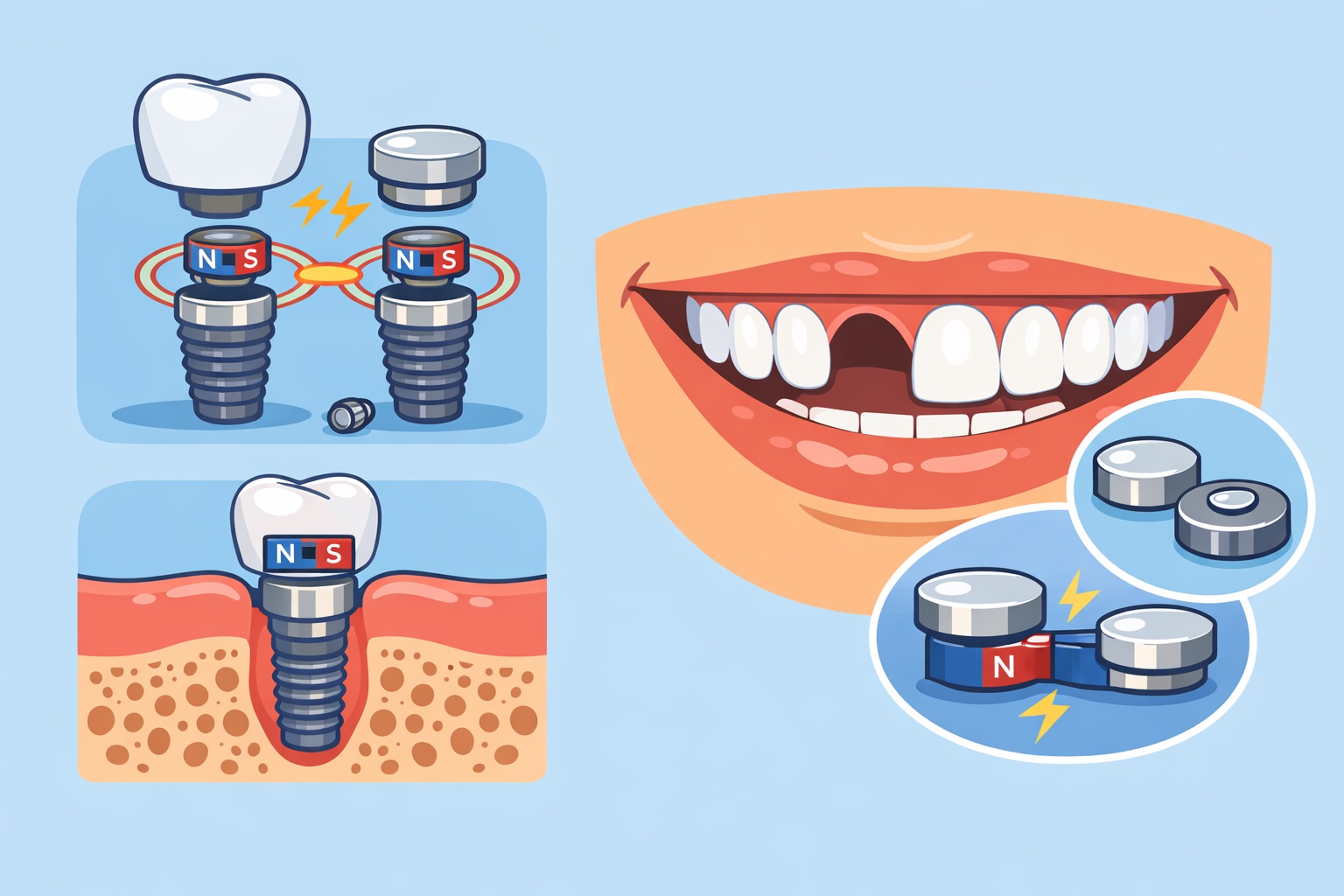
Magnetic dental implants are a special type of dental solution that uses magnets to help keep false teeth in place. They work a bit differently than regular implants, which are usually secured by screws. Instead, these implants have magnets that attract and hold the replacement teeth securely.
Here’s how it usually goes: a dentist places a small metal post in your jawbone, just like traditional implants. Then, they attach a magnet on top of that post. The false tooth, or denture, has a matching magnet that connects to the one in your jaw. This makes it easier to take off and put back on, which is great for cleaning. You don’t have to worry about messy adhesives that can sometimes get stuck.
Some advantages of magnetic implants include:
- They’re easier to handle, especially for people who struggle with traditional dentures.
- They can be less painful to insert and replace than screws.
While they’re still gaining popularity, many people find them comfortable and practical.
How Magnetic Dental Implants Work
Magnetic dental implants use small magnets to keep dentures in place. Here’s how it works: the dentist places a special metal implant in your jawbone. Once it heals, a magnet is attached to the implant.
The denture has a metal plate with magnets that connect to the implant. This setup helps hold the denture tight, making it feel more natural when you eat or talk. You won’t have to worry about your denture slipping around.
Many people find this type of implant easier to manage. For example, you don’t need messy adhesives to keep your dentures secure. Just pop them off when you need to clean them, and snap them back on when you’re done.
Benefits of Magnetic Dental Implants
Magnetic dental implants offer some neat advantages that can make life easier for people who need them. First off, they’re generally easier to place than traditional implants. The magnets help hold the dentures securely, which means less fuss during the fitting process.
Another great thing is how they can help with bone health. When you lose teeth, your jawbone can weaken over time. Since magnetic implants encourage natural bone growth, they can help keep your jaw stronger.
- They’re removable, making cleaning simpler.
- Magnetic implants tend to be lighter than other options, which some people find more comfortable.
Plus, you’ll be able to eat your favorite foods without worrying too much about your dental work. That’s a big win for many!
Cost Considerations for Magnetic Dental Implants
Magnetic dental implants can be a bit tricky when it comes to costs. They’re often more than regular dental implants. You might be looking at a price range that varies quite a bit depending on your location and the dentist’s experience.
While each case is unique, here are a few things that can affect the price:
- Dental Evaluation: Before getting implants, you’ll usually need a thorough dental check-up. This might add to the initial cost.
- Materials Used: The quality of the magnets and other materials can change the price. Some options are more durable but also pricier.
- Follow-up Visits: You may need a few follow-up appointments to ensure everything is healing well, and those can add up too.
Remember to check if your dental insurance covers any of the costs, as that can help make things a bit lighter on your wallet!
Factors to Consider Before Choosing Magnetic Implants
Choosing magnetic dental implants isn’t just about looks; there are some important things to think about first. One big factor is how healthy your gums are. If your gums aren’t in great shape, it could affect how well the implants work.
Another thing to consider is the cost. Magnetic implants can be pricier than traditional ones. You’ll want to check if your insurance covers any part of it, or if you’re prepared to pay out of pocket.
- Comfort: Some people find magnetic implants feel different from their natural teeth. Make sure you’re okay with that before going ahead.
- Maintenance: These implants might need special care, so ask your dentist about what you’ll need to do to keep them in good shape.
Common Mistakes with Magnetic Dental Implants
Many people make some common mistakes when it comes to magnetic dental implants. One big mistake is thinking they don’t need to take care of them. Just like regular teeth, these implants need cleaning and care. If you ignore them, it can lead to problems.
Another mistake is assuming that the implants will always stay in place without any issues. While they’re designed to be strong, sometimes factors like wear and tear or poor fit can cause them to loosen. Regular check-ups with your dentist can help catch these problems early.
- Not following aftercare instructions given by your dentist.
- Skipping routine dental visits for check-ups.
Care and Maintenance of Magnetic Dental Implants
Taking care of your magnetic dental implants is pretty straightforward. You’ll want to treat them like your natural teeth, which means regular brushing and flossing. Make sure to use a soft-bristled toothbrush and a non-abrasive toothpaste. This helps keep both your implants and gums healthy.
It’s also a good idea to visit your dentist regularly. They can check if everything looks good and clean any areas that you might miss. Watch out for signs of gum irritation or discomfort, as these could be signals that something needs attention.
- Brush at least twice a day.
- Floss daily to remove plaque.
- Avoid hard foods that might damage the implants.
- Drink plenty of water to keep your mouth hydrated.
Don’t forget, if you have any questions or concerns, you should reach out to your dentist. They’re there to help, and they can give you the best advice for your specific situation.
Frequently Asked Questions About Magnetic Dental Implants
Many people wonder about magnetic dental implants. Here are some common questions and answers to help clear things up.
What are magnetic dental implants? They’re a type of dental implant that uses magnets to help hold dentures in place. This can make it easier to chew and speak compared to traditional dentures.
Are they painful to get? Most people don’t find them painful. The procedure is usually done with numbing, so you won’t feel much. Afterward, there might be some soreness, but that’s pretty normal.
How do they hold the dentures? The implants are placed in your jawbone. Then, strong magnets in the implants connect to matching magnets in the dentures. This keeps everything secure but still lets you remove the dentures when needed.
How long do they last? With good care, magnetic dental implants can last many years. Regular dental check-ups are important to keep everything in great shape.
Can anyone get them? Not everyone is a good candidate. If you have gum disease or certain medical conditions, it’s best to talk to your dentist about it.
Comparing Magnetic Implants with Traditional Dental Solutions
Magnetic dental implants are getting more attention, but how do they stack up against the traditional ones? Let’s break it down.
Traditional implants involve placing a post in your jawbone, which can take time to heal. It’s a solid method, but some people find it uncomfortable. On the other hand, magnetic implants use a different approach. They have a magnetic connection that helps hold the tooth in place. This can make them easier to put in and take out, which is great for those who might need replacements often.
- Comfort: Many find magnetic implants feel less invasive than traditional ones.
- Process: The procedure for magnetic implants can be quicker since it doesn’t always require surgery on the jaw.
- Maintenance: Magnetic implants can be easier to clean and maintain since you can remove the teeth when needed.
Both options have their perks and downsides. Traditional implants are usually more permanent, but magnetic implants offer flexibility that some prefer. It really comes down to what fits your lifestyle and needs best.