
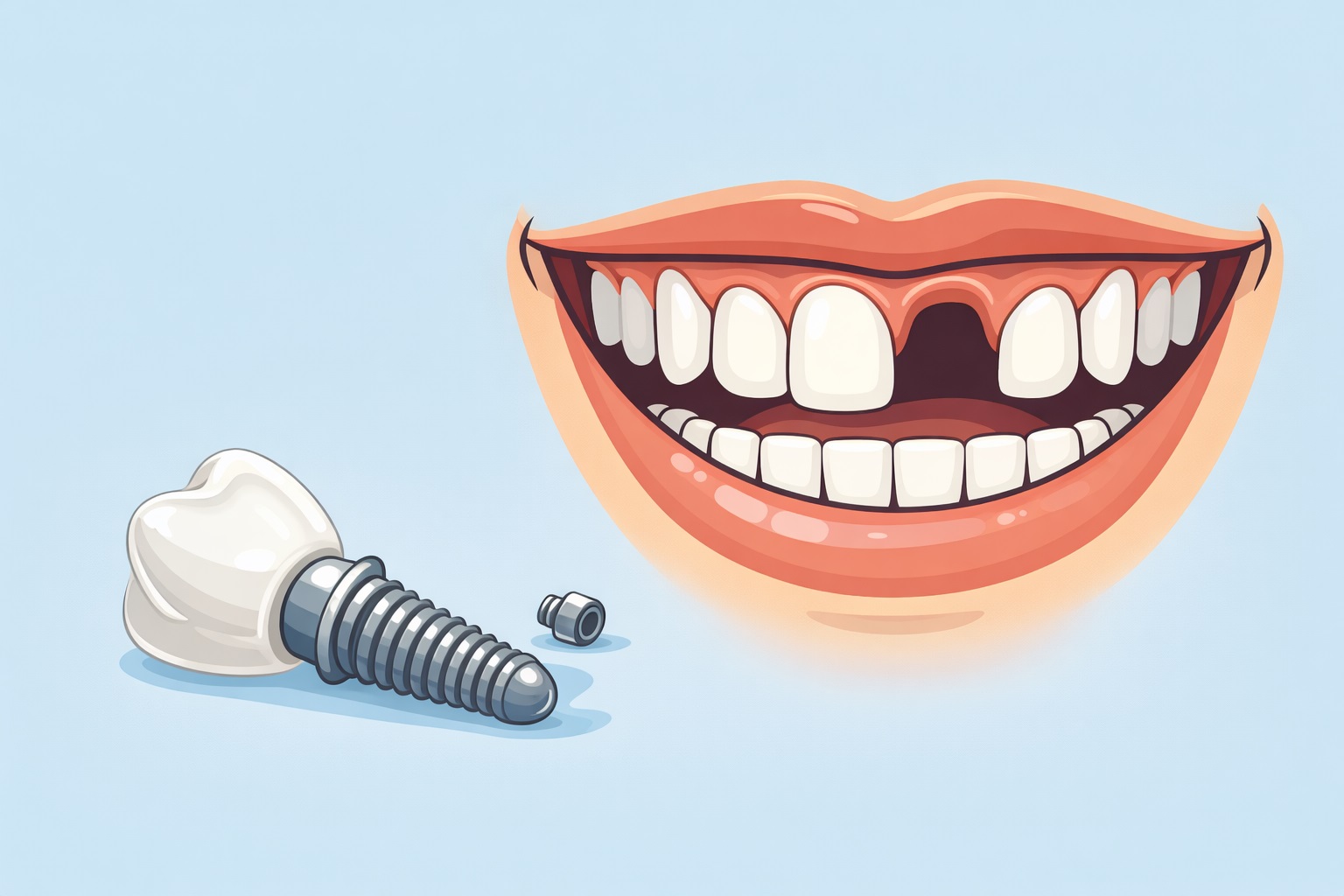
Dental implants are one of the most reliable and long-lasting solutions for replacing missing teeth. Whether you’ve lost a single tooth or require full-mouth restoration, implants offer both functional and aesthetic benefits. However, not all dental implants are the same. They vary in placement technique, procedure type, materials used, and cost. Understanding these differences is crucial when working with your dentist to select the implant type that suits your oral health, bone structure, and budget.
Classification by Placement Technique
Endosteal Implants
Endosteal implants are the most common type. These implants are placed directly into the jawbone and typically shaped like small screws or cylinders.
Best For: Patients with healthy, sufficient jawbone mass.
Advantages: High success rate, long-term durability, supports single or multiple teeth
Disadvantages: Requires sufficient bone volume, longer healing time
Subperiosteal Implants
These sit on top of the jawbone but beneath the gum tissue, supported by a metal frame.
Best For: Patients with minimal bone height who can’t undergo bone grafting
Advantages: Less invasive bone preparation, shorter treatment time
Disadvantages: Less stable than endosteal implants
Zygomatic Implants
Longer implants anchored into the cheekbone for patients with severe upper jaw bone loss.
Best For: Severe bone loss in the upper jaw
Advantages: No bone grafting needed, immediate load possible
Disadvantages: Complex procedure, requires experienced specialists
Classification by Procedure Type
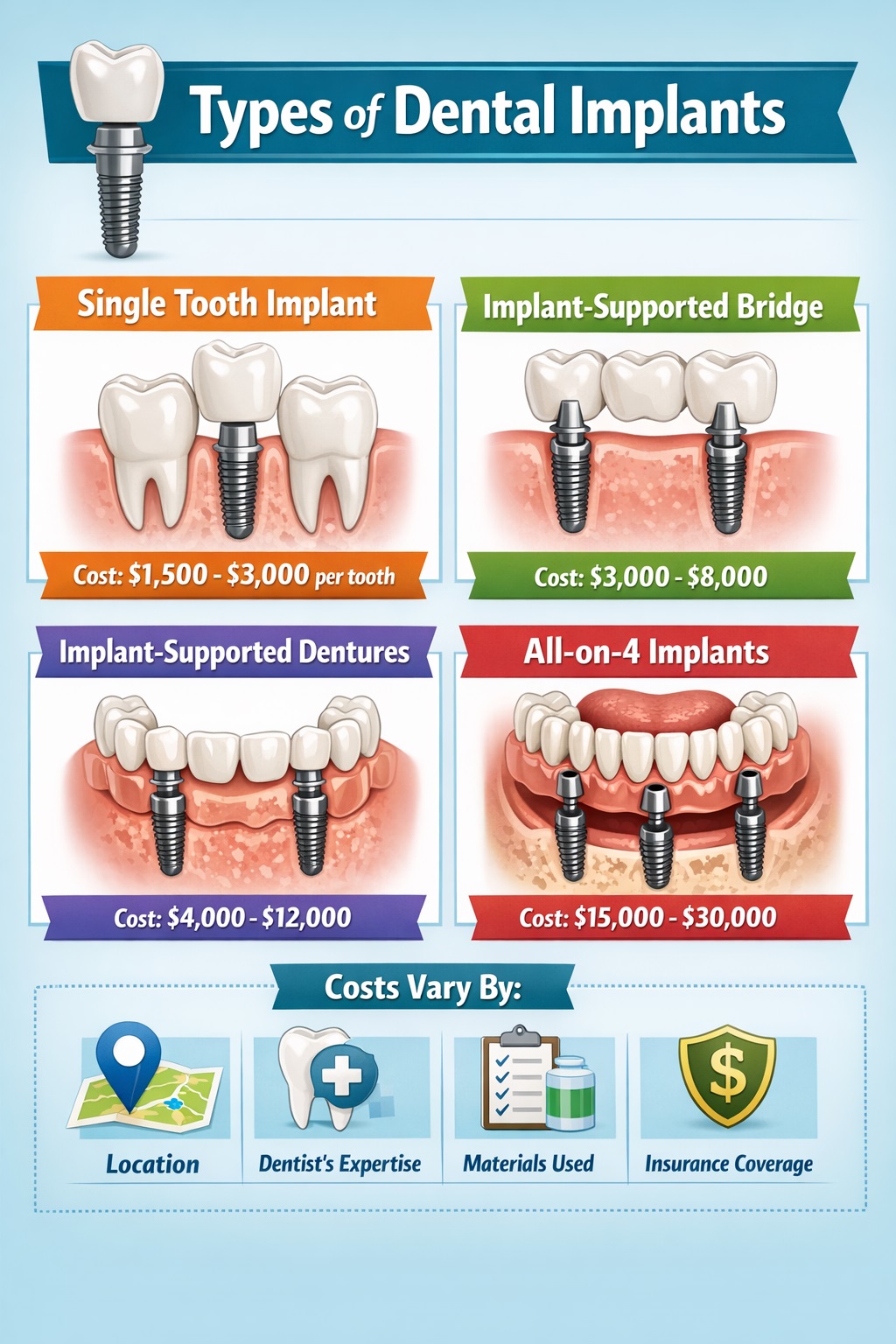
Single Tooth Implants
Used when one tooth is missing.
Benefits: Preserves adjacent teeth, natural function and appearance
Implant-Supported Bridges
For multiple missing teeth in a row, using 2+ implants to support a bridge.
Benefits: Stable, avoids altering nearby teeth, long-lasting
All-on-4 / Full Mouth Implants
Uses 4–6 implants to support a full upper or lower arch of teeth.
Benefits: Restores full function, fixed solution, often one-day procedure
Mini Dental Implants
Smaller in diameter and often used to stabilize dentures or in narrow bone.
Benefits: Lower cost, less invasive, quicker healing
Limitations: Less durable, not ideal for high biting forces
Types of Materials Used in Implants
Titanium Implants
Most common, known for strength and biocompatibility.
Pros: Long-term success, affordable, flexible design
Cons: May show through gums, not metal-free
Zirconia Implants
Ceramic, metal-free, and tooth-colored alternative.
Pros: Aesthetic, metal-free, low plaque accumulation
Cons: Higher cost, limited long-term data, less flexible
Titanium vs Zirconia Comparison
| Feature | Titanium | Zirconia |
|---|---|---|
| Biocompatibility | Excellent | Excellent |
| Aesthetics | May show under gums | Natural tooth color |
| Durability | Very high | High |
| Flexibility | High (two-piece) | Limited (one-piece) |
| Cost | Moderate | Higher |
Cost Comparison Between Implant Types
Average Cost Ranges (USD)
| Implant Type | Average Cost per Tooth | Notes |
|---|---|---|
| Single Tooth Implant | $3,000 – $4,500 | Includes implant, abutment, and crown |
| Implant-Supported Bridge | $6,000 – $10,000 | 3+ teeth supported by 2 implants |
| All-on-4 Full Arch | $15,000 – $30,000 | Per arch |
| Mini Dental Implants | $500 – $1,500 | Often for dentures |
| Zirconia Implant | $4,000 – $5,500 | Per tooth |
Insurance & Financing
While most dental insurance covers implants partially, many clinics offer financing or payment plans to reduce the upfront cost.
Advantages and Disadvantages of Each Type
Placement Techniques
- Endosteal: Stable and long-lasting, but needs good bone structure
- Subperiosteal: Alternative to bone grafting, less stable over time
- Zygomatic: Ideal for severe bone loss, complex and expensive
Procedures
- Single Implants: Great for individual teeth
- Bridges: Cost-effective for multiple teeth
- All-on-4: Efficient full arch solution
- Mini Implants: Affordable and fast, but less durable
Materials
- Titanium: Proven and adaptable, but may show through gums
- Zirconia: Metal-free and aesthetic, but less customizable
How to Choose the Right Dental Implant Type
Dentist’s Evaluation
Includes scans and oral health checks to assess bone quality, gum condition, and medical risks.
Bone Density
Determines whether standard or alternative implants (like subperiosteal or zygomatic) are needed.
Aesthetic and Functional Goals
Front teeth? Zirconia may be better. Full arch? All-on-4. Budget? Mini implants.
Budget
Balance short-term cost with long-term durability. Discuss insurance and payment options.
Health and Lifestyle
Smokers, diabetics, or patients with sensitivities need tailored solutions.
Conclusion
Dental implants offer one of the most effective ways to restore missing teeth, both in function and aesthetics. With multiple types available—ranging from single tooth replacements to full-arch restorations—understanding the differences in placement techniques, materials, procedures, and costs is key to making an informed choice.
Choosing the right dental implant depends on a combination of your oral health, bone structure, personal goals, and budget. While titanium remains the most commonly used material due to its strength and longevity, zirconia offers a metal-free, aesthetic alternative. Whether you’re looking for a minimally invasive option like mini implants or require a full-mouth solution like All-on-4, consulting with an experienced dental professional is essential to ensure the best long-term outcome.