
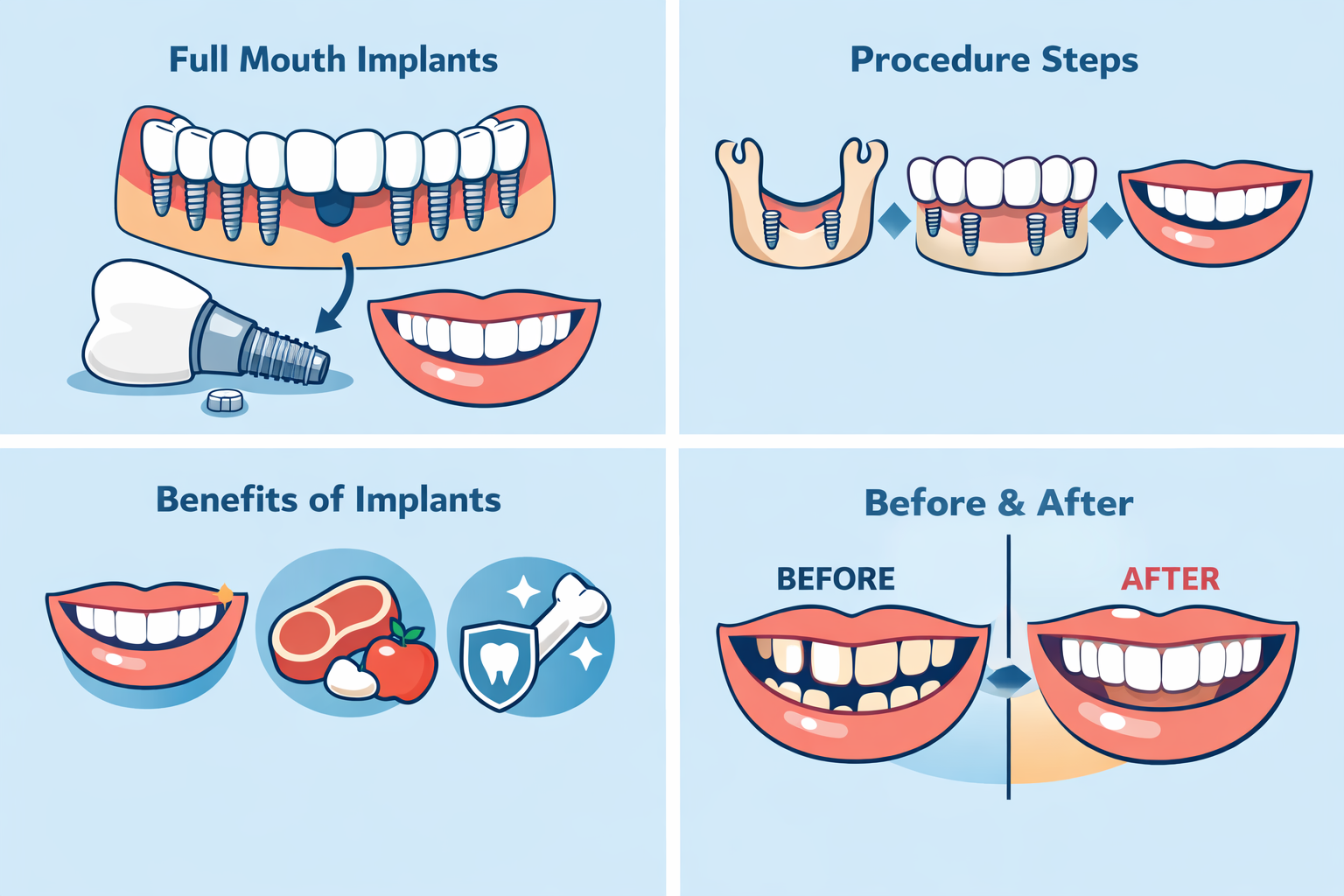
Whole mouth implants, sometimes referred to as full arch dental implants, can be a game changer for those looking to restore their smile. If you’re missing most or all of your teeth, these implants provide a stable foundation for a complete set of teeth. Instead of dealing with multiple individual implants, you’ll get a whole set anchored by just a few strategically placed posts in your jawbone.
One of the main benefits is the efficiency. It usually takes just a few appointments to get everything sorted. You’ll walk in for the consultation, and then there’s typically a quick surgical procedure to place the implants. After a healing period, custom-made prosthetics are fitted to give you that smile you’ve been missing.
- They can look and feel like natural teeth, so people often forget they’re dentures.
- Maintaining them is straightforward—regular brushing and dental check-ups are all you need.
One thing to keep in mind is that they aren’t for everyone. Factors like bone density and overall health can impact whether you’re a good candidate. Your dentist will run some tests to see if it’s the right fit for you. And don’t hesitate to ask questions—being informed will help you make the best choice for your smile.
Benefits of Whole Mouth Implants
Whole mouth implants can completely transform the way you eat, speak, and smile. Imagine biting into an apple without worrying if your teeth will hold up or smiling confidently in photos without feeling self-conscious. It’s a game changer for many people.
One of the biggest perks is durability. Unlike traditional dentures that can slip or require messy adhesives, whole mouth implants are anchored securely in your jaw. This stability not only improves comfort but also gives you that natural feel, like you’re back to having your own teeth.
- Enhanced Chewing Ability: Many people find it’s easier to enjoy a variety of foods again, from crunchy veggies to sticky sweets.
- Reduced Bone Loss: Implants can help prevent the jawbone deterioration associated with missing teeth, which can change your facial structure over time.
Plus, they’re low maintenance! No more soaking them overnight or worrying about stains from coffee or tea. With just regular brushing and flossing, you can keep your implants looking great.
Factors Influencing Cost of Whole Mouth Implants
The cost of whole mouth implants can vary widely based on several factors. Understanding these can help you plan better and avoid any surprises along the way.
First off, the type of implant you choose plays a crucial role. There are different materials and designs, and some are simply more expensive than others. For instance, titanium implants are strong and popular, but they often come with a higher price tag compared to other options.
Your location can also affect costs. Dentists in urban areas might charge more due to higher overheads. On the flip side, you might find more affordable options in smaller towns, but the expertise of the provider should remain a priority.
Other factors to keep in mind include:
- Dental condition: If you need bone grafting or extractions beforehand, those procedures can add to the overall cost.
- Expertise of the dentist: An experienced implant specialist may charge more for their services, but you’re likely paying for quality and skill.
Finally, don’t forget about post-operative care and maintenance. Follow-up visits and adjustments are part of the process, and these can add to your total expenses. It’s wise to discuss everything upfront with your dentist, so you have a clear picture of what to expect.
Steps Involved in Getting Whole Mouth Implants
Getting whole mouth implants isn’t just a one-and-done appointment; it’s a multi-step process that takes some planning and patience. First off, you’ll start with a consultation. During this visit, your dentist will look at your mouth, take some X-rays, and discuss your goals. They’ll want to know about your dental history and any concerns you might have.
Once you’re on the same page, the next step often involves some preparatory work. If you’ve got any remaining teeth that aren’t up to snuff, they might need to be removed. Depending on your jawbone condition, you might also need a bone graft to ensure there’s a solid foundation for the implants.
- After any necessary preparatory work, it’s time for the implants themselves. This usually involves placing titanium posts into the jawbone, which act as the new roots.
- You’ll then need some recovery time while the implants integrate with your bone, often several months. During this phase, you may have temporary dentures or bridges to help with day-to-day life.
- Once you’re healed, you’ll return to the dentist to have the permanent crowns attached to the implants, giving you that complete smile.
Remember, everyone’s journey is a bit different, so it’s important to stay in close contact with your dental team throughout this process.
Common Mistakes to Avoid with Whole Mouth Implants
Getting whole mouth implants is a big decision, and it’s easy to trip up along the way. One of the biggest mistakes people make is not doing enough research. You might think you know what you want, but it’s crucial to understand all your options and what’s involved in the procedure. Chatting with your dentist or a specialist can really help clarify what’s best for your needs.
Another common pitfall is skipping the planning and consultation phase. Rushing into it without proper measurements and imaging can lead to complications down the line. For instance, some folks might expect immediate results, but the healing process can take time. Skipping follow-up appointments can also lead to missed opportunities to address any issues early on.
- Neglecting aftercare instructions; those are there for a reason!
- Assuming all implant brands are the same—there’s a lot of variation in quality.
Lastly, it’s easy to overlook the importance of a good diet after the procedure. Soft foods are your friend, but some don’t realize how crucial that is for successful healing. So take your time, stay informed, and don’t hesitate to ask questions. Your smile deserves it!
Essential Care Tips for Whole Mouth Implants
Caring for your whole mouth implants is pretty straightforward, but it does require some attention. After all, these replacements are a big investment in your smile and overall dental health. Here are some practical tips to keep them in great shape.
First and foremost, maintaining good oral hygiene is key. Brush your teeth at least twice a day with a soft-bristled toothbrush and a non-abrasive toothpaste. Don’t forget to gently brush your gums and the areas around the implants; it can help prevent gum disease.
- Floss daily, but be careful. Use a floss threader or special implant floss to navigate around the implant posts without damaging them.
- Regular dental check-ups are a must. Your dentist will keep an eye on how the implants are holding up and catch any potential issues early.
Lastly, watch what you’re eating. Hard foods can lead to complications; think about swapping those crunchy snacks for softer alternatives once in a while. It’s all about listening to your body and being mindful of how your mouth feels after certain meals.
FAQs About Whole Mouth Implants
If you’re considering whole mouth implants, you probably have a few questions swirling in your mind. Let’s tackle some of the most common ones.
What exactly are whole mouth implants? Essentially, they’re a way to replace most or all of your teeth using a series of dental implants. Think of it as giving your mouth a fresh start. It can be particularly beneficial if your teeth are in a poor state.
How long does the process take? The entire procedure can vary, but many people go through multiple visits over several months. It’s not just a quick swap-out; there’s a healing period involved after the implants are placed before you get fitted for your new teeth.
Is it painful? You might feel some discomfort afterward, similar to what you’d expect after tooth extractions. But you’ll be given anesthesia during the procedure, plus pain management options to keep you comfortable.
What about maintenance? Caring for whole mouth implants isn’t much different than looking after natural teeth. You’ll want to stick to a good brushing and flossing routine, along with regular check-ups with your dentist.
Overall, it’s a significant decision, so don’t hesitate to talk to your dentist about what’s best for you!
Alternatives to Whole Mouth Implants
If whole mouth implants aren’t quite what you’re looking for, there are several other options to consider. Each comes with its own pros and cons, so it really depends on your specific needs and circumstances.
One popular alternative is a full arch bridge. This involves fewer implants than a whole mouth approach but can still provide that solid sense of security. It’s essentially a bridge that’s anchored to implants at either end, allowing you to replace a whole row of teeth efficiently. Just keep in mind that it can wear down over time and might need adjustments.
- Dentures: Traditional dentures can be a more affordable option. While they might not feel as natural as implants, modern designs have improved a lot. Just remember they require a bit more maintenance and might shift if not properly fitted.
- Snap-in Dentures: These are a perfect blend of implants and conventional dentures. They clip onto a few strategically placed implants, giving you more stability without going for a full mouth approach.
- Partial dentures: If you’re missing only a few teeth, partial dentures can be a practical solution. They don’t require as much dental work, but they do need regular care to keep them in good shape.